
Introduction
The waste management industry plays a crucial role in protecting the environment, conserving natural resources, and supporting sustainable economic development. As population growth, urbanisation, industrial activity, and consumption increase the volume of waste generated, managing discarded materials has become an important environmental priority. Traditional waste disposal practices can contribute to greenhouse gas emissions, air pollution, soil contamination, and the loss of valuable resources. Reducing the carbon footprint of waste management operations is therefore essential for building cleaner communities and supporting a low-carbon economy.
Carbon footprint reduction in this industry involves improving waste collection, treatment, processing, recycling, and disposal practices to minimise greenhouse gas emissions. It also requires a shift away from the traditional approach of collecting and discarding waste towards systems that prevent waste generation, recover useful materials, and extract value from resources that would otherwise be lost.
Waste management companies, municipalities, manufacturers, and households all have an important role in this transition. By adopting innovative technologies, improving operational efficiency, and promoting responsible consumption, the industry can reduce its environmental impact while creating economic opportunities through resource recovery and sustainable services.
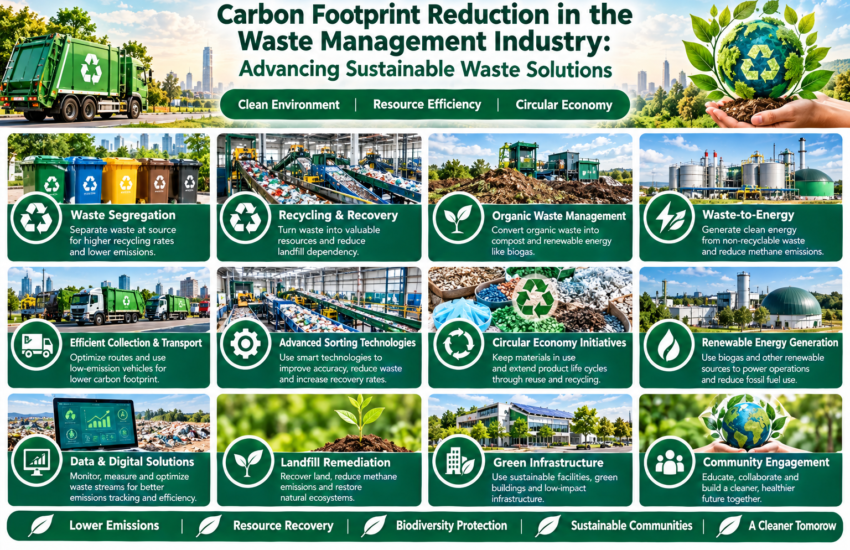
Reducing Waste Generation at the Source
Preventing waste before it enters the disposal system is one of the most effective ways to reduce emissions across the waste management value chain. When fewer materials are discarded, less energy is required for collection, transportation, sorting, treatment, and final disposal. Waste prevention can also reduce the emissions associated with manufacturing replacement products and extracting additional raw materials.
Businesses can minimise waste by reviewing their production processes, purchasing practices, packaging requirements, and material utilisation. Manufacturers can redesign products to use fewer resources, while retailers can improve inventory management to avoid damaged, expired, or unsold goods. Offices and commercial establishments can introduce digital documentation, reusable supplies, and responsible procurement practices.
Waste management service providers can support these efforts by conducting waste audits and helping clients identify unnecessary waste generation. Such assessments can reveal opportunities to improve material handling, reduce contamination, and establish effective waste segregation systems.
Source reduction is particularly valuable because it addresses environmental impacts before waste treatment becomes necessary. By prioritising prevention, organisations can lower disposal costs, improve resource productivity, and reduce the overall carbon intensity of their operations.
Improving Waste Collection and Transportation
Waste collection and transportation account for a significant share of the operational activities undertaken by waste management companies. Collection vehicles consume fuel, generate exhaust emissions, and contribute to traffic congestion when routes are poorly planned. Improving logistics can therefore help reduce emissions while making waste collection services more efficient.
Digital route optimisation systems enable operators to plan collection schedules according to waste volumes, traffic conditions, vehicle capacity, and disposal facility locations. Sensors installed in waste containers can provide information about fill levels, helping operators avoid unnecessary collection trips and deploy vehicles where they are most needed.
Fleet modernisation offers additional opportunities. Electric collection vehicles can reduce tailpipe emissions, particularly when charged using low-carbon electricity. Alternative fuels and fuel-efficient vehicles may also provide benefits where full electrification is not yet practical.
Companies can further improve performance through regular vehicle maintenance, driver training, appropriate load management, and the consolidation of collection routes. Locating transfer stations and treatment facilities strategically can reduce the distance waste travels before processing.
These improvements help waste management organisations lower fuel consumption, reduce operating expenditure, and deliver more reliable services to residential, commercial, and industrial customers.
Advancing Recycling and Material Recovery
Recycling is an important strategy for reducing the carbon footprint of waste management because it enables valuable materials to return to productive use. Producing goods from recovered materials can reduce the need for virgin resources, which often require energy-intensive extraction, processing, and manufacturing.
Materials such as paper, cardboard, glass, metals, and suitable plastics can be recovered through effective collection and sorting systems. Modern material recovery facilities use mechanical equipment, optical sorting, magnetic separation, and other technologies to improve the identification and separation of recyclable materials.
However, recycling performance depends heavily on the quality of incoming waste. Food residue, hazardous substances, and mixed materials can contaminate recyclable streams and reduce the value of recovered resources. Public awareness campaigns, clear disposal instructions, and separate collection systems can improve material quality.
Waste management companies can collaborate with manufacturers to develop recycling systems that respond to actual market demand for recovered materials. Establishing reliable supply agreements with recyclers and industrial users helps ensure that collected materials are processed into useful products rather than accumulating in storage or being sent for disposal.
By strengthening material recovery infrastructure and improving recycling quality, the industry can conserve resources, reduce manufacturing-related emissions, and create new opportunities in the circular economy.
Managing Organic Waste and Reducing Methane Emissions
Organic waste, including food scraps, garden waste, and certain agricultural residues, requires specialised management because its decomposition can release methane under oxygen-limited conditions. Methane is a potent greenhouse gas, making the effective treatment of biodegradable waste an important part of climate mitigation.
Separate collection of organic waste allows suitable materials to be directed towards composting or anaerobic digestion. Composting uses controlled biological processes to transform organic matter into a soil amendment, provided that the process is managed to minimise avoidable emissions and contamination.
Anaerobic digestion breaks down biodegradable material in an oxygen-free environment and produces biogas that can be used for heat, electricity, or upgrading into renewable gas. The remaining digestate may be used as a soil amendment when it meets applicable quality and safety requirements.
Food waste prevention should remain a priority because treating discarded food does not eliminate the emissions generated during its production, processing, and transportation. Restaurants, supermarkets, food manufacturers, and households can reduce these impacts through improved demand forecasting, inventory management, food donation arrangements, and careful storage practices.
Waste management operators can maximise climate benefits by ensuring that organic waste is collected separately, treatment systems operate efficiently, and methane leakage from digestion and biogas infrastructure is controlled.
Decarbonising Waste Treatment Facilities
Waste treatment facilities consume electricity and fuel through sorting machinery, shredders, conveyors, pumps, ventilation systems, and other equipment. Improving the energy performance of these facilities can reduce operational emissions and lower electricity costs.
Energy audits help operators identify inefficient equipment, unnecessary energy consumption, and opportunities for process improvement. Replacing outdated machinery, installing variable-speed drives, improving insulation, and introducing automated monitoring can help reduce energy demand.
Facilities can also evaluate renewable energy installations, such as rooftop solar photovoltaic systems, where suitable. Electricity generated on-site can support processing operations and reduce dependence on carbon-intensive power sources.
Waste-to-energy technologies may recover useful energy from residual waste that cannot be practically reused or recycled. However, their environmental performance depends on waste composition, plant efficiency, pollution controls, and the energy source being displaced. Such facilities should not undermine waste prevention or recycling efforts by creating a continuing demand for recyclable materials.
Careful technology selection and transparent emissions monitoring are essential to ensure that treatment facilities contribute meaningfully to climate objectives while maintaining environmental and public health safeguards.
Promoting Circular Economy Practices
A circular economy changes how society designs, uses, repairs, and recovers products. Rather than treating waste as an unavoidable endpoint, it considers discarded materials as potential resources that can retain economic value through repeated use.
Waste management companies can contribute to circularity by expanding repair, refurbishment, remanufacturing, and reuse services. Furniture, electronic equipment, construction components, textiles, and industrial materials may often be recovered for further use instead of being discarded.
Construction and demolition waste offers particular opportunities for material recovery. Concrete, metals, timber, and selected building components can be sorted and processed for suitable applications. Reusing materials can reduce demand for newly manufactured products and avoid some of the emissions associated with extraction and production.
Product manufacturers can support these systems through durable product design, replaceable components, accessible repair services, and take-back arrangements. Waste operators can establish partnerships with local businesses to identify markets for recovered materials and develop dependable reuse networks.
Circular economy practices can create employment, encourage business innovation, and reduce pressure on natural resources. Their climate benefits are strongest when recovered products genuinely replace newly manufactured alternatives and the environmental costs of collection and processing remain proportionate.
Measuring Emissions and Strengthening Environmental Performance
Accurate carbon accounting enables waste management organisations to understand the environmental consequences of their activities and prioritise effective improvements. Emissions may arise from fuel consumption, purchased electricity, landfill operations, biological treatment, waste incineration, and the production or maintenance of equipment.
Organisations should establish consistent methods for collecting operational data and calculating greenhouse gas emissions. Relevant information includes vehicle fuel use, electricity consumption, waste quantities, treatment methods, landfill gas capture, and the movement of recovered materials.
Landfill operators require particular attention because methane generation can continue long after waste has been deposited. Appropriate landfill gas collection, treatment, and utilisation systems can reduce methane releases, although their effectiveness depends on site conditions, collection efficiency, and system maintenance.
Environmental performance indicators can help management teams compare facilities, identify inefficient processes, and track progress over time. Transparent reporting also enables municipalities, customers, regulators, and investors to understand how waste management services contribute to wider climate objectives.
Where possible, companies should assess emissions across the full waste management chain rather than focusing exclusively on their own fuel and electricity consumption. This broader perspective helps identify improvements that deliver genuine environmental benefits without simply transferring emissions to another stage of the process.
Challenges and Future Opportunities
The transition towards low-carbon waste management involves financial, technological, and operational challenges. Older facilities may require substantial upgrades, while smaller operators may lack the capital and technical expertise needed to introduce advanced treatment systems. Contamination, inconsistent waste segregation, limited recycling markets, and inadequate infrastructure can also restrict progress.
Addressing these barriers requires cooperation between public authorities, waste management companies, manufacturers, technology providers, and communities. Investment in collection infrastructure, workforce training, research, and public education can strengthen the effectiveness of waste reduction programmed.
Emerging technologies offer opportunities to improve waste identification, automate sorting, monitor landfill gas, and optimise facility performance. Artificial intelligence and data analytics can help operators forecast waste volumes, identify collection inefficiencies, and make better use of available infrastructure.
Future progress will also depend on policies that encourage waste prevention, responsible product design, recycling, and the safe recovery of materials. A balanced strategy should combine technological improvements with changes in production and consumption patterns.
Conclusion
Carbon footprint reduction in the waste management industry requires a comprehensive approach that addresses waste generation, collection, treatment, resource recovery, and final disposal. Preventing unnecessary waste, improving transportation efficiency, expanding recycling, managing organic materials responsibly, and modernising treatment facilities can significantly improve the sector’s environmental performance.
The industry must also strengthen emissions measurement, improve operational accountability, and collaborate with businesses and communities to support circular resource use. These measures can reduce greenhouse gas emissions while conserving materials, improving service efficiency, and creating economic opportunities.
By shifting from a disposal-focused model towards prevention, recovery, and responsible resource management, the waste management industry can become an active contributor to climate action. Sustained investment, technological innovation, and shared responsibility will be essential to building cleaner communities and a more sustainable future.
