
How Carbon Footprint Helps the Pulp and Paper Industry Reduce Carbon Footprint
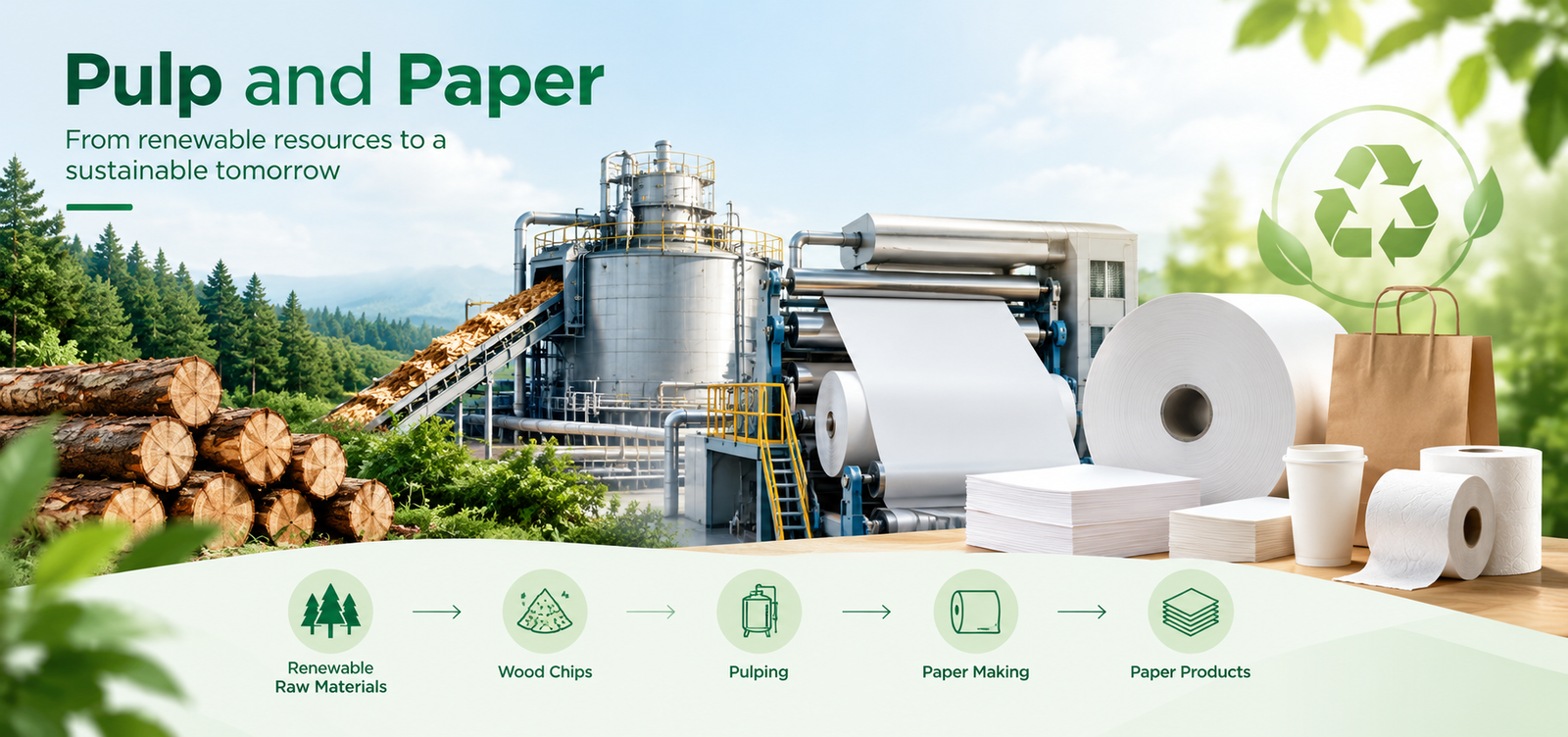
The pulp and paper industry plays an essential role in packaging, publishing, communication, hygiene products, and numerous industrial applications. At the same time, pulp and paper production involves energy-intensive processes, chemical recovery systems, steam generation, water treatment, drying, transportation, and extensive use of biomass and other raw materials. These activities can create significant greenhouse gas emissions across the production lifecycle.
At Carbon Footprint, we help pulp and paper manufacturers understand the sources of their emissions and develop practical strategies to reduce them. Our approach goes beyond simply calculating emissions. We examine production processes, energy systems, raw-material sourcing, chemical use, water and wastewater operations, waste streams, logistics, and other relevant activities to identify opportunities for measurable carbon reduction.
Our Approach
Establishing a Mill-Level Carbon Baseline
The first step toward reducing emissions is understanding the current carbon profile of the facility. We assess the major sources of greenhouse gas emissions associated with pulp and paper operations and establish an emissions baseline.
Our assessment can cover pulp production, paper machines, boilers, power generation, chemical recovery, material handling, wastewater treatment, transportation, purchased electricity, and other relevant activities.
By developing a detailed emissions inventory, we help management understand the relationship between production activity, energy consumption, and carbon emissions.
Optimizing Boiler and Steam Systems
Steam is central to pulp and paper manufacturing, particularly for cooking, drying, evaporation, and other thermal processes. Boiler performance therefore has a direct influence on energy consumption and emissions.
We evaluate opportunities to improve boiler efficiency, combustion performance, steam distribution, condensate recovery, insulation, and heat utilization.
Better steam management can reduce fuel requirements and improve the overall energy performance of the mill without compromising production requirements.
Maximizing Energy Recovery
Pulp and paper mills generate various process streams that can contain recoverable energy. We assess opportunities to improve energy recovery and utilization within the facility.
This may include optimizing recovery systems, improving heat exchange, recovering heat from process streams, and making better use of available biomass-based energy resources.
The objective is to extract greater value from existing energy flows and minimize avoidable energy losses.
Improving Paper Machine Efficiency
Paper machines operate through a series of energy-intensive stages involving stock preparation, forming, pressing, drying, finishing, and converting.
We examine energy use across these stages to identify inefficient operating conditions and opportunities for improvement. Areas such as drying performance, vacuum systems, drives, motors, fans, pumps, and compressed-air systems can be assessed for efficiency improvements.
Improving the energy performance of paper machines can reduce emissions while supporting consistent production and product quality.
Responsible Fibre Sourcing
Raw materials are an important component of the pulp and paper industry’s environmental footprint. Fibre can originate from forest resources, recovered paper, agricultural residues, or other sources depending on the product and manufacturing process.
We help organizations evaluate the environmental implications of their fibre sourcing strategies and identify opportunities to increase responsible and resource-efficient material use.
For businesses using recycled fibre, we can also examine opportunities to improve collection, sorting, preparation, and utilization practices to maximize material recovery.
Increasing Recovered Fibre Utilization
Recycled paper can play an important role in reducing dependence on virgin fibre and supporting circular material flows. However, recovered fibre systems require efficient collection, sorting, cleaning, and processing..
We help organizations assess the feasibility of increasing recovered material use while considering product specifications, fibre quality, process requirements, and operational constraints.
Improved material circularity can help reduce resource consumption and the emissions associated with producing certain virgin materials.
Optimizing Chemical Consumption
Chemical-intensive operations are present throughout pulp production, bleaching, paper treatment, and other manufacturing stages. The production and transportation of chemicals can contribute to indirect emissions.
We assess chemical consumption patterns and process requirements to identify opportunities for optimization. Better process control, appropriate chemical dosing, recovery improvements, and reduced material losses can help lower resource consumption and associated environmental impacts.
Reducing Water-Related Energy Demand
Water is extensively used throughout pulp and paper manufacturing. Water intake, pumping, heating, treatment, circulation, and wastewater management can all require energy.
We evaluate water-use patterns to identify opportunities for process-water optimization, internal recycling, closed-loop systems, and improved treatment efficiency.
Reducing unnecessary water movement and treatment can also reduce the energy associated with water management.
Improving Wastewater Treatment Efficiency
Wastewater treatment is an essential part of responsible pulp and paper production. Treatment systems can consume considerable amounts of energy depending on the process configuration and wastewater characteristics.
We assess treatment operations to identify opportunities for improving aeration efficiency, pumping performance, process control, sludge management, and energy utilization.
Better wastewater management can contribute to both environmental compliance and lower operational emissions.
Managing Biomass and Process Residues
Pulp and paper manufacturing can generate biomass residues, bark, black liquor, sludge, ash, and other process-related materials. These streams should be evaluated based on their potential for recovery, reuse, recycling, or beneficial utilization.
We help organizations assess these material flows and identify opportunities to reduce disposal while increasing resource recovery.
Where appropriate, better utilization of biomass residues can contribute to energy efficiency and reduce reliance on external fossil-based energy sources.
Electrification of Suitable Processes
Where technically and economically feasible, replacing fossil-fuel-based equipment with electrically powered alternatives can create opportunities for emissions reduction, particularly when electricity is increasingly sourced from lower-carbon generation.
We help organizations identify processes where electrification may be appropriate and evaluate the associated energy and carbon implications.
The assessment considers equipment requirements, operating conditions, energy demand, infrastructure, and potential integration with renewable electricity.
Reducing Transportation Emissions
Pulp, recovered fibre, chemicals, packaging materials, and finished paper products can travel considerable distances between suppliers, mills, warehouses, and customers.
We analyze transportation activities and identify opportunities to reduce emissions through improved shipment planning, better vehicle utilization, logistics consolidation, route optimization, and alternative transportation options.
These measures can improve both environmental performance and logistics efficiency.
Carbon-Conscious Product Development
Different paper products can have significantly different material, energy, and processing requirements. We help organizations incorporate carbon considerations into product development and portfolio decisions.
This can include evaluating material intensity, recycled content, product durability, production requirements, packaging, and end-of-life considerations.
Such analysis can provide valuable information for businesses developing lower-impact paper and packaging products.
Building Reliable Carbon Data Systems
Effective carbon management depends on accurate and consistent information. We help pulp and paper companies establish processes for collecting and organizing relevant environmental data from different departments and facilities.
This may include information on fuel consumption, electricity, production volumes, raw materials, transportation, waste, water, and other emission sources.
Reliable data enables organizations to identify trends, compare performance, establish meaningful indicators, and demonstrate progress.
Benefits to Clients
Improved Mill Efficiency
Identifying energy and process inefficiencies can help mills improve resource productivity while maintaining operational performance.
Lower Energy and Resource Consumption
Optimization of steam, electricity, water, chemicals, and raw materials can reduce unnecessary consumption and associated costs.
Better Carbon Visibility
A structured assessment provides management with a clearer understanding of emissions sources across manufacturing and value-chain activities.
Stronger Customer and Buyer Confidence
Paper and packaging buyers increasingly request information about environmental performance. Reliable carbon data can help suppliers respond to these requirements with greater transparency.
Improved ESG and Sustainability Readiness
A robust carbon inventory provides a foundation for sustainability disclosures, customer assessments, ESG reporting, and future environmental requirements.
Support for Circular Economy Objectives
Increasing material recovery, recycled fibre utilization, resource efficiency, and beneficial use of process residues can support more circular production systems.
Long-Term Operational Resilience
Improving energy and resource efficiency can help businesses manage exposure to changing energy costs, resource constraints, environmental requirements, and evolving market expectations.
Why Choose Carbon Footprint
Understanding of Process-Based Emissions
We assess emissions in relation to actual production activities rather than treating the manufacturing facility as a single emissions source. This allows reduction opportunities to be connected directly to individual processes.
Practical Reduction Planning
Our recommendations are designed to be actionable. We help organizations identify potential measures, prioritize opportunities, and establish practical implementation pathways.
Whole-Facility Perspective
We consider energy, materials, water, chemicals, waste, transportation, and other relevant sources together to provide a comprehensive view of environmental performance.
Data-Driven Assessment
We use operational information and emissions data to identify carbon hotspots and support evidence-based sustainability decisions.
Support Beyond Carbon Calculation
Our role extends from understanding the carbon footprint to identifying reduction opportunities, supporting sustainability planning, and establishing mechanisms for monitoring progress.
Solutions Aligned With Business Objectives
Carbon reduction strategies need to work within real production environments. We consider operational requirements, technology feasibility, resource availability, and business priorities when developing recommendations.
Creating a More Sustainable Pulp and Paper Industry
The transition toward a lower-carbon pulp and paper industry requires improvements across energy generation, manufacturing efficiency, fibre management, water systems, chemical use, waste recovery, logistics, and product design.
At Carbon Footprint, we help organizations identify where emissions are generated, understand the underlying drivers, and develop practical pathways for reducing them. By connecting carbon management with resource efficiency and operational improvement, we help pulp and paper businesses move toward a more efficient, circular, and resilient future.
Our objective is to turn carbon reduction from a reporting exercise into an ongoing business improvement program—helping organizations measure their impact, act on opportunities, monitor progress, and build long-term environmental performance.