
How Carbon Footprint Helps the Iron and Steel Industry Reduce Carbon Footprint
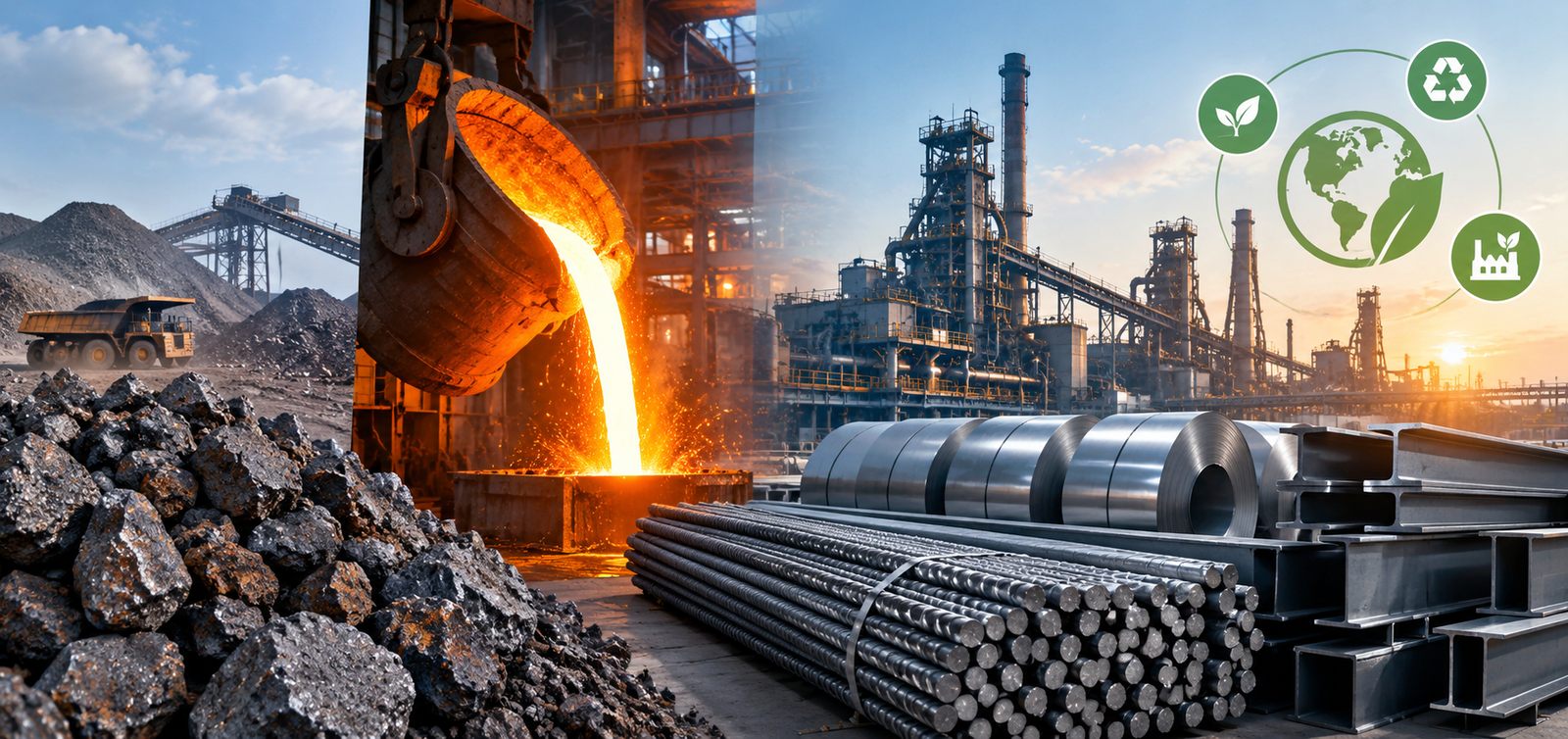
Iron and steel are fundamental to modern infrastructure, supporting construction, transportation, engineering, energy, machinery, appliances, and manufacturing. At the same time, steelmaking is highly energy- and carbon-intensive because it involves processes such as mining, raw-material preparation, coke production, ironmaking, steelmaking, casting, rolling, finishing, and transportation. As customers, investors, governments, and industrial buyers place greater emphasis on lower-carbon materials, steel producers are increasingly looking for practical pathways to reduce emissions while maintaining production, quality, and competitiveness.
At Carbon Footprint, we work with iron and steel producers, foundries, rolling mills, fabricators, processors, and related businesses to identify carbon-intensive activities and develop structured reduction strategies. Our approach connects emissions measurement with process improvement, energy management, resource efficiency, technology assessment, and continuous performance monitoring.
Our Approach
Understanding the Steel Production Route
Iron and steel plants can have very different emissions profiles depending on their production technology and raw-material mix. Integrated plants, electric arc furnace facilities, direct reduced iron units, foundries, and downstream processing facilities require different carbon reduction strategies.
We begin by understanding the organization’s production route, material inputs, energy sources, equipment, and operating conditions. This enables us to map relevant emission sources and determine where carbon reduction opportunities exist.
The assessment can cover raw-material handling, coke and sinter operations, blast furnaces, direct reduction processes, electric arc furnaces, basic oxygen furnaces, casting, rolling, finishing, utilities, transportation, and supporting infrastructure.
Improving Furnace Performance
Ironmaking and steelmaking furnaces require substantial amounts of energy and process inputs. Even small improvements in operating efficiency can have a meaningful impact when applied across large production volumes.
We examine furnace performance, operating parameters, fuel consumption, energy losses, maintenance practices, and production conditions to identify potential efficiency improvements.
Our recommendations may focus on process control, equipment optimization, heat utilization, maintenance practices, and operating discipline. The objective is to improve output from existing energy and material inputs while reducing avoidable emissions.
Optimizing Coke and Coal Consumption
For production routes that use coke and coal, carbon-intensive fuels are an important consideration. Their use contributes to both energy-related and process-related emissions.
We help organizations examine fuel consumption patterns and identify opportunities to reduce unnecessary consumption through improved process control, material quality management, combustion efficiency, and operational optimization.
Where alternative technologies or lower-carbon inputs are technically appropriate, we can also support organizations in evaluating potential transition pathways.
Supporting Direct Reduced Iron and Alternative Production Routes
Alternative ironmaking technologies can provide opportunities to reduce dependence on conventional carbon-intensive production routes.
We help organizations evaluate the carbon implications of technologies such as direct reduced iron and other emerging lower-carbon production pathways. The assessment considers energy requirements, raw materials, available infrastructure, technology maturity, and the carbon intensity of the energy supply.
This allows businesses to evaluate technology transition options based on their individual production circumstances.
Increasing the Role of Electric Arc Furnaces
Electric Arc Furnaces can provide an alternative steelmaking pathway, particularly when suitable scrap is available and electricity is sourced from lower-carbon generation.
We help organizations assess the energy and emissions implications of electric steelmaking and identify opportunities to improve furnace electricity efficiency.
For facilities considering greater electrification, we can evaluate energy requirements, renewable electricity opportunities, equipment considerations, and potential emissions reductions.
Making Better Use of Waste Heat
Steelmaking produces substantial quantities of heat that may otherwise be lost. Recovering and using this energy can improve overall plant efficiency.
We examine opportunities for waste-heat recovery from suitable furnaces, exhaust systems, cooling processes, and other high-temperature operations.
Recovered heat can potentially support steam generation, preheating, power generation, or other suitable applications depending on site conditions.
Improving Energy Management Across the Plant
Steel facilities operate numerous energy-consuming systems beyond the primary furnaces. Rolling mills, pumps, fans, motors, compressors, cooling systems, lighting, material-handling equipment, and auxiliary systems can collectively represent significant energy demand.
We assess energy consumption across these systems to identify inefficient equipment and operating practices.
Energy management measures can include improved motor efficiency, variable-speed drives, compressed-air optimization, cooling-system improvements, equipment scheduling, and automated energy monitoring.
Reducing Material Losses
Raw materials and intermediate products can be lost through handling, processing, off-specification production, slag generation, scale formation, and other production losses.
We analyze material flows to identify where avoidable losses occur and where recovery or reuse may be possible.
Improving material yield means producing the required quantity of saleable steel with fewer inputs, reducing the emissions associated with raw-material extraction, processing, and energy consumption.
Better Management of Slag and By-Products
Steel production generates several by-products, including slag, dust, mill scale, and other residues. Some of these materials can potentially be recovered or utilized in other applications.
We help organizations evaluate their by-product management systems and identify opportunities for recovery, reuse, recycling, and beneficial utilization.
Better resource recovery can reduce disposal requirements while creating opportunities to replace virgin materials in suitable applications.
Increasing Scrap Recovery
Steel is highly suitable for recycling, making scrap management an important component of a circular steel strategy.
We assess internal scrap generation, collection, segregation, storage, and recovery practices. Improving scrap utilization can help organizations retain valuable materials within the production cycle and reduce unnecessary resource losses.
For suitable production routes, greater utilization of recovered steel can also support lower-carbon production strategies.
Improving Raw-Material Logistics
Iron ore, coal, coke, limestone, scrap, alloys, and other materials must be transported into and around steel facilities. Finished steel products then move to customers and distribution centers.
We evaluate logistics patterns to identify opportunities to reduce unnecessary movement, improve vehicle and equipment utilization, consolidate shipments, and optimize transportation planning.
Efficient logistics can reduce fuel consumption and associated emissions while improving material flow across the plant.
Managing Water and Cooling Systems
Steel production requires substantial cooling and process water. Pumping, treatment, circulation, and cooling infrastructure can consume significant amounts of energy.
We examine water and cooling systems to identify opportunities for improved circulation, heat exchange, recirculation, and equipment efficiency.
Improving these systems can reduce both water requirements and the energy associated with water management.
Developing Lower-Carbon Procurement Practices
A steel company’s carbon footprint can extend beyond its manufacturing facility through purchased materials, energy, transportation, equipment, and services.
We help organizations incorporate environmental considerations into procurement decisions where relevant. Supplier emissions information, material characteristics, energy sources, and environmental performance can be incorporated into appropriate procurement frameworks.
This can help businesses gradually increase visibility into value-chain emissions and identify opportunities for supply-chain improvements.
Measuring Product-Level Carbon Performance
Steel buyers increasingly seek greater transparency regarding the environmental characteristics of the materials they purchase. We help organizations establish systems for understanding emissions associated with products, production facilities, or specific manufacturing routes.
Product-level carbon information can support customer communication, environmental declarations, procurement requirements, and internal decision-making.
It can also help organizations identify which production pathways offer opportunities for lower-carbon product development.
Creating a Carbon Reduction Roadmap
After identifying emissions sources and reduction opportunities, we help organizations develop a structured carbon reduction roadmap.
The roadmap can prioritize initiatives according to potential emissions impact, technical feasibility, investment requirements, implementation timelines, and operational considerations.
This enables management to move from a broad sustainability ambition to a practical sequence of actions that can be monitored over time.
Benefits to Clients
Improved Production Efficiency
Better control of energy, materials, and production processes can help steel businesses improve resource productivity without compromising output.
Reduced Energy Consumption
Optimization of furnaces, rolling equipment, motors, pumps, compressors, cooling systems, and other plant infrastructure can reduce unnecessary energy use.
Lower Carbon Intensity
Identifying carbon-intensive production activities and implementing targeted interventions can help organizations reduce emissions associated with their products and operations.
Greater Material Recovery
Improved scrap, slag, scale, dust, and by-product management can reduce material losses and strengthen resource efficiency.
Better Customer Responsiveness
Reliable carbon information can help steel suppliers respond to sustainability-related requirements from automotive, construction, engineering, infrastructure, and other industrial customers.
Improved ESG Preparedness
A structured carbon management system can provide valuable information for sustainability disclosures, ESG reporting, customer assessments, and climate-related initiatives.
Support for Technology Transitions
Carbon analysis can help organizations evaluate potential investments in electrification, renewable energy, alternative ironmaking technologies, energy recovery, and other lower-carbon solutions.
Why Choose Carbon Footprint
Steel-Specific Assessment
We recognize that an integrated steel plant, electric arc furnace facility, foundry, rolling mill, and downstream processor have fundamentally different operational and emissions profiles. Our assessments are tailored accordingly.
Process-Level Analysis
We examine individual production processes and supporting systems to identify where emissions and energy losses occur, rather than relying only on organization-wide averages.
Focus on Measurable Improvements
Our approach connects carbon reduction with operational performance, allowing organizations to identify initiatives that can be monitored through relevant performance indicators.
Technology-Neutral Evaluation
We assess potential reduction pathways based on the organization’s production route, technical conditions, energy availability, and business requirements rather than applying a single solution to every facility.
Integration of Carbon and Resource Management
Energy, raw materials, scrap, water, waste, by-products, and logistics are interconnected. We consider these areas together to identify opportunities for simultaneous environmental and operational improvements.
Continuous Carbon Performance Management
Carbon reduction requires ongoing measurement and review. We support organizations in tracking performance, assessing implemented initiatives, updating reduction plans, and identifying additional opportunities as technologies and market expectations evolve.
Building the Future of Lower-Carbon Steel
The transformation of the iron and steel industry will require improvements across production technology, energy sourcing, raw-material efficiency, recycling, process control, logistics, and product transparency. There is no single solution applicable to every steel producer.
At Carbon Footprint, we help organizations understand their individual emissions profile and identify the most relevant opportunities for reduction. From furnace efficiency and energy management to scrap recovery, waste-heat utilization, renewable electricity, alternative production pathways, and product carbon assessment, we support businesses throughout their carbon reduction journey.
Our objective is to help iron and steel companies reduce emissions, improve resource productivity, strengthen environmental performance, and prepare for the evolving low-carbon industrial economy.